
A Visit to Kakuma
What a Refugee Camp Becomes Over Time

Salaam all!
A very late Ramadan Mubarak. It’s been some time. The world is a very different place from when I started writing this piece, and in the waiting, weeks/months have passed. So much has happened so quickly, and I hope you are all well, surviving in this chaos.
I am back with another post about my research examining refugee law, media narratives, and how humanitarian policy operates in practice, particularly in contexts of protracted displacement. As things have been shifting, I’ve been trying to understand how legal frameworks and dominant narratives shape the everyday realities of refugee life, as well as how memory and image-making influence which experiences are documented and how displacement is remembered over time. Both by those experiencing it and those of us witnessing it.
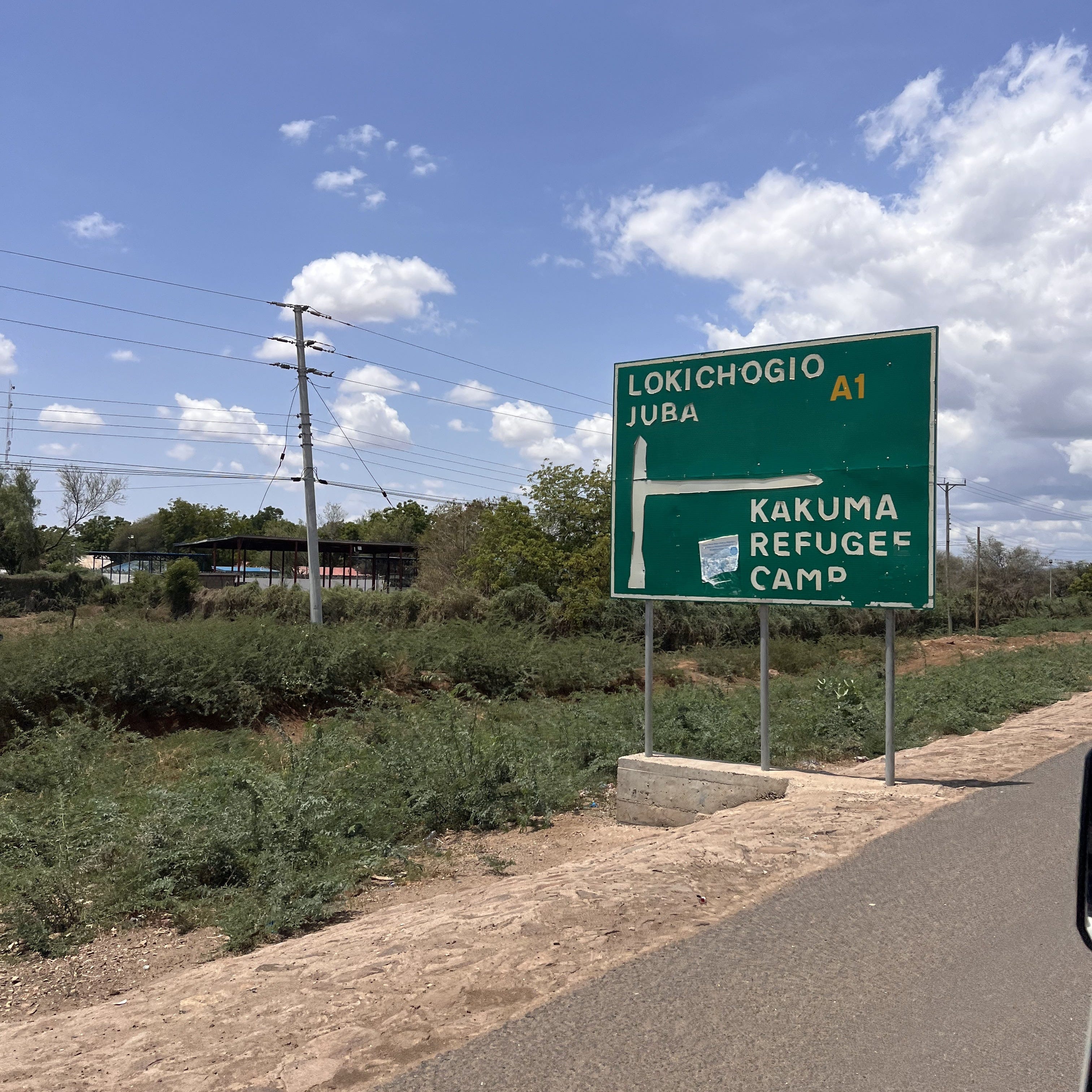
I wanted to share personal reflections from my visit to Kakuma Refugee Camp. It was an incredible opportunity to visit alongside one of my partner organizations, FilmAid Kenya, and get a better understanding of what’s happening on the ground following the global humanitarian aid cuts. It was a powerful experience, and I’ve tried to capture a few thoughts to share. I left with a sense of unease that has stayed with me. And the unease wasn’t rooted in a singular moment, but in the realization that Kakuma is not a temporary space awaiting some sort of resolution. It is a long-term social environment that has been governed as transitional for decades, even as life continues to be built and sustained within it.
Arrival and Stillness
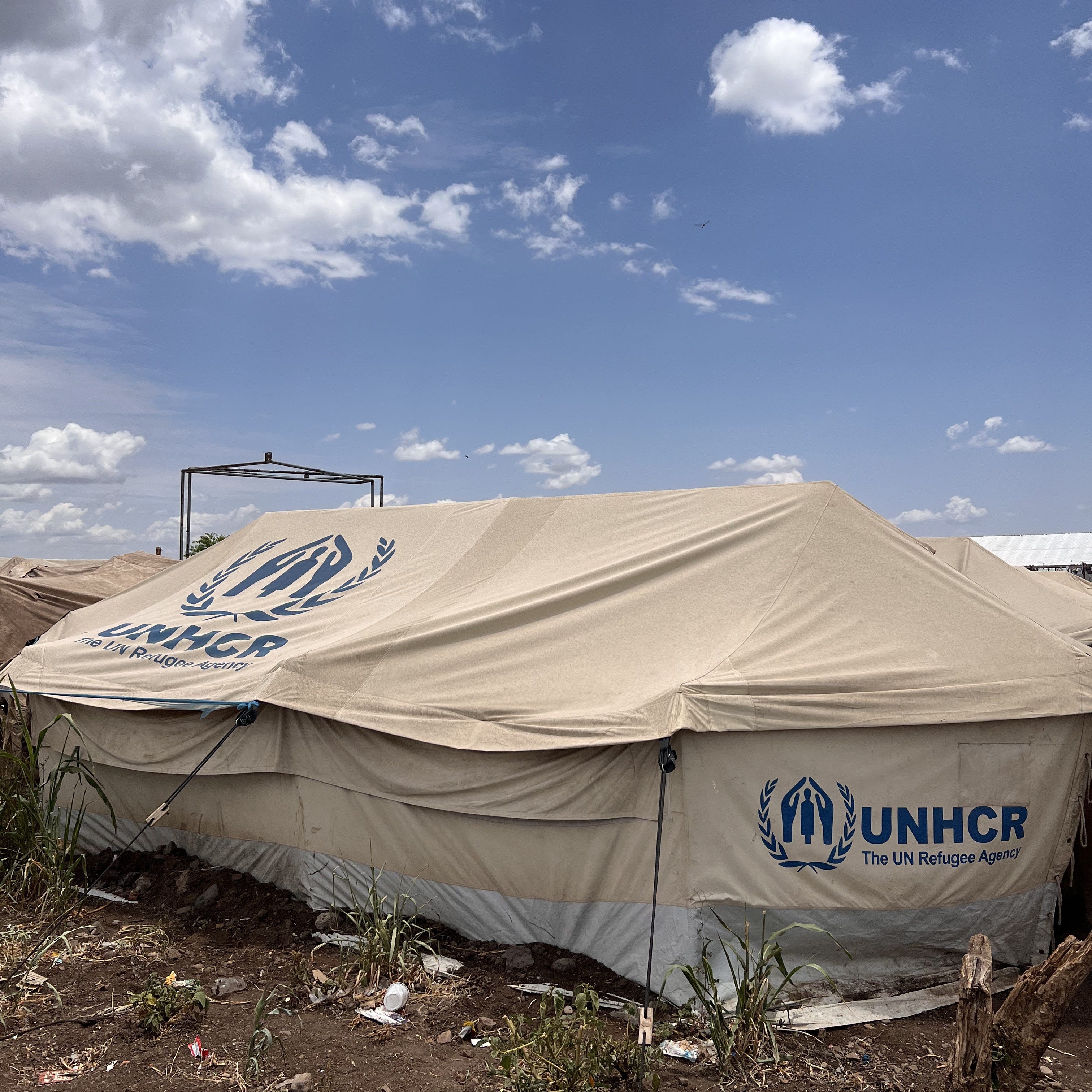
When I arrived in Kakuma, I was very conscious of my role as both a visitor and a researcher. I could come, observe, and (perhaps, most importantly) leave. Kakuma is commonly referred to as a refugee camp, a term that suggests impermanence. And yet, nearly everything about it, from the camp’s infrastructure, to the social networks, and the administrative systems, shows signs of long-term settlement rather than movement toward another place or even possible integration into the broader national identity. Educational programs and health services run year after year, markets are open pretty regularly, and informal governance works alongside what remains of the humanitarian administration. Kakuma is built for and organized around this idea of continuity, even though the legal and humanitarian frameworks governing it still treat it as temporary.
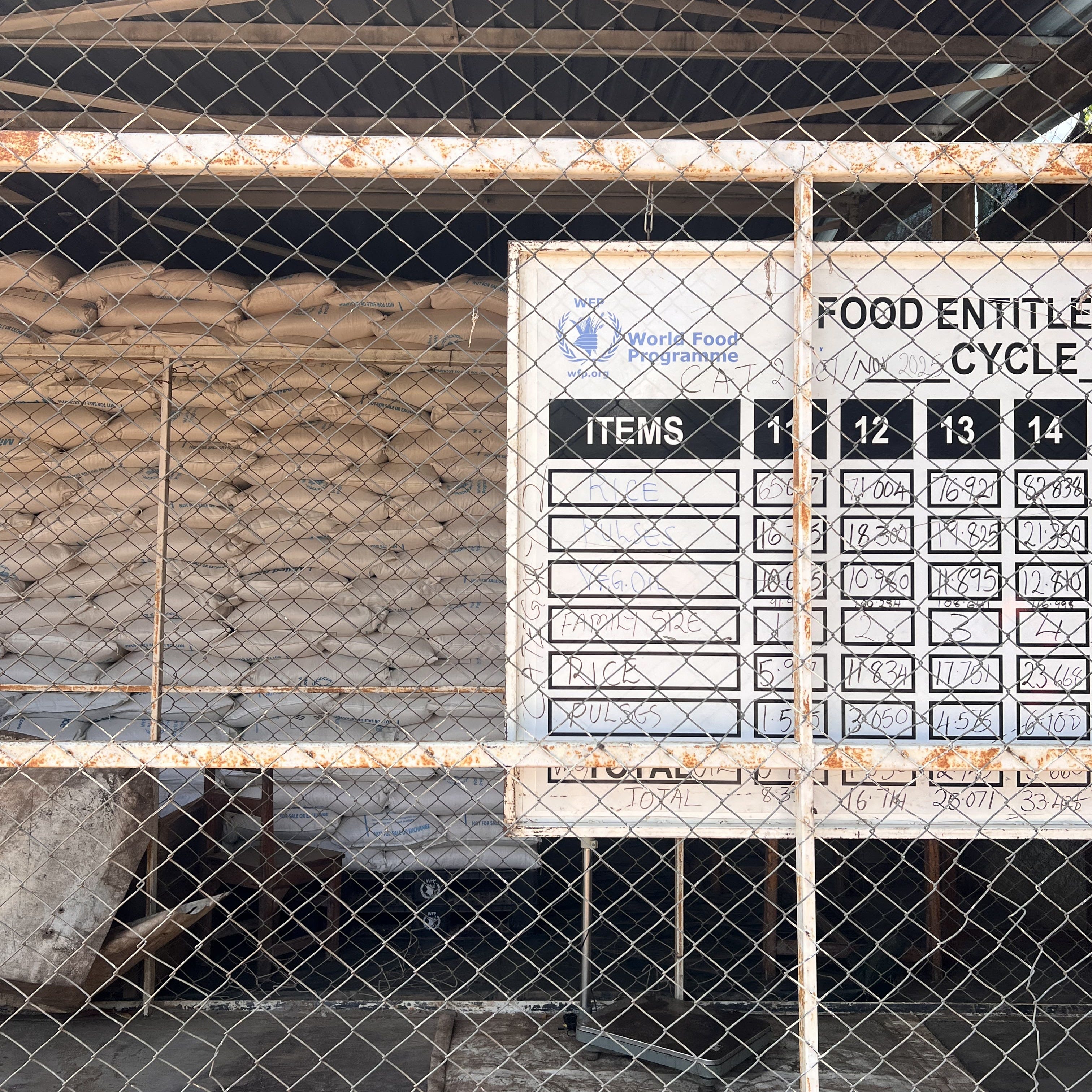
My visit late last year coincided with a period of significant reductions in humanitarian funding affecting refugee operations in Kenya and across the world. The past year has been marked by worldwide uncertainty about humanitarian aid and funding, with USAID cuts threatening the stability of various programs and structures in the sector. On the ground, I saw how these reductions registered as incremental and consequential changes to daily life. People have been experiencing things like food rations being reduced and long-term offered services suddenly becoming less reliable.
Kakuma, like most refugee resettlement sites, was originally established as an emergency response to an influx of displaced persons. It was intended to function as a temporary holding site while more durable solutions were pursued for arrivals. Over time, this has consolidated into the current structural condition. And decades later, we have a site that continues to operate under legal and policy frameworks that deny permanence while also relying on its continued existence. The reality is that multiple generations have now been born and raised in Kakuma under a system that classifies them as transient.
However, I came to learn that this constructed temporality serves a critical governance function. It enables long-term management as well as long-term reliance on international funding without corresponding long-term obligations from the appropriate institutions or governmental bodies. And for the residents of the camp, the restrictions on movement, limitations on formal employment, and the absence of political inclusion are justified by a presumption of an eventual departure date, in which futures for refugees and asylum seekers are in limbo by design. This way, temporality becomes almost a tool of control.
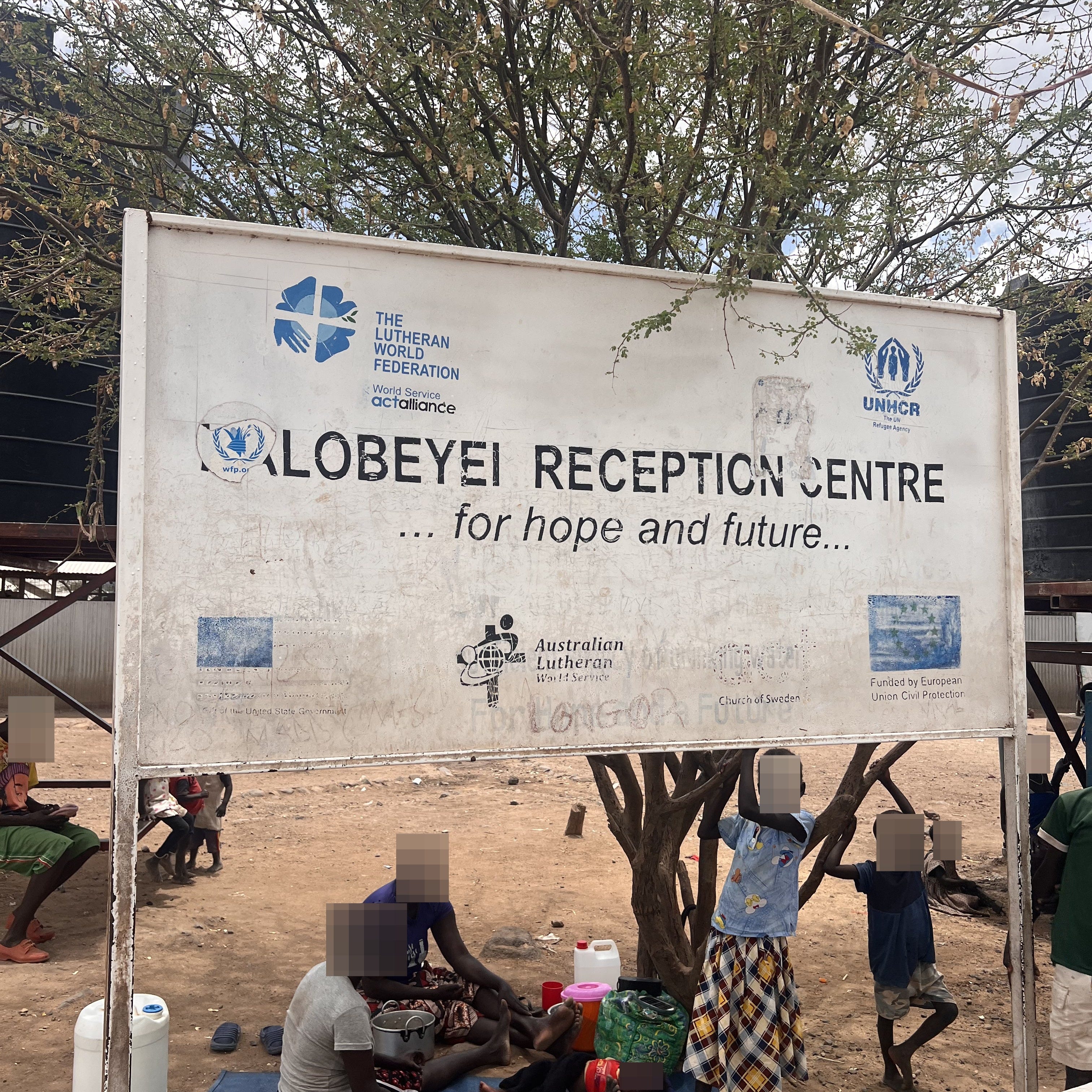
It is important for me to note that the terminology of “refugee camp” is not a neutral one. It’s a term that sustains a legal fiction that allows humanitarian intervention to persist without addressing the national/political implications of this prolonged settlement. By refusing to acknowledge the permanence, states and aid donors are able to reserve a sort of flexibility while also generating ongoing uncertainty for both refugees and host communities alike.
Kakuma operates within a legal framework that is shaped by international refugee law as well as Kenya’s own domestic refugee policy. Kenya is a signatory to the 1951 Refugee Convention, its 1967 Protocol, and the 1969 OAU Refugee Convention, all of which affirm protections like non-refoulement and access to basic services. In reality, this implementation has been filtered through policies that severely restrict freedom of movement and access to formal employment.
It’s true that recent reforms, including Kenya’s Refugees Act of 2021 and the current proposed Shirika Plan, signal intentions toward inclusion, self-reliance, and integration. However, at this time these commitments remain unevenly realized. Refugees continue to encounter legal and administrative barriers to mobility and labor markets. The distance between policy and lived reality is not a failure of implementation alone, but rather, I believe, it is a structural feature of how refugee governance has come to operate in Kakuma.
Camps as Sites of Creation
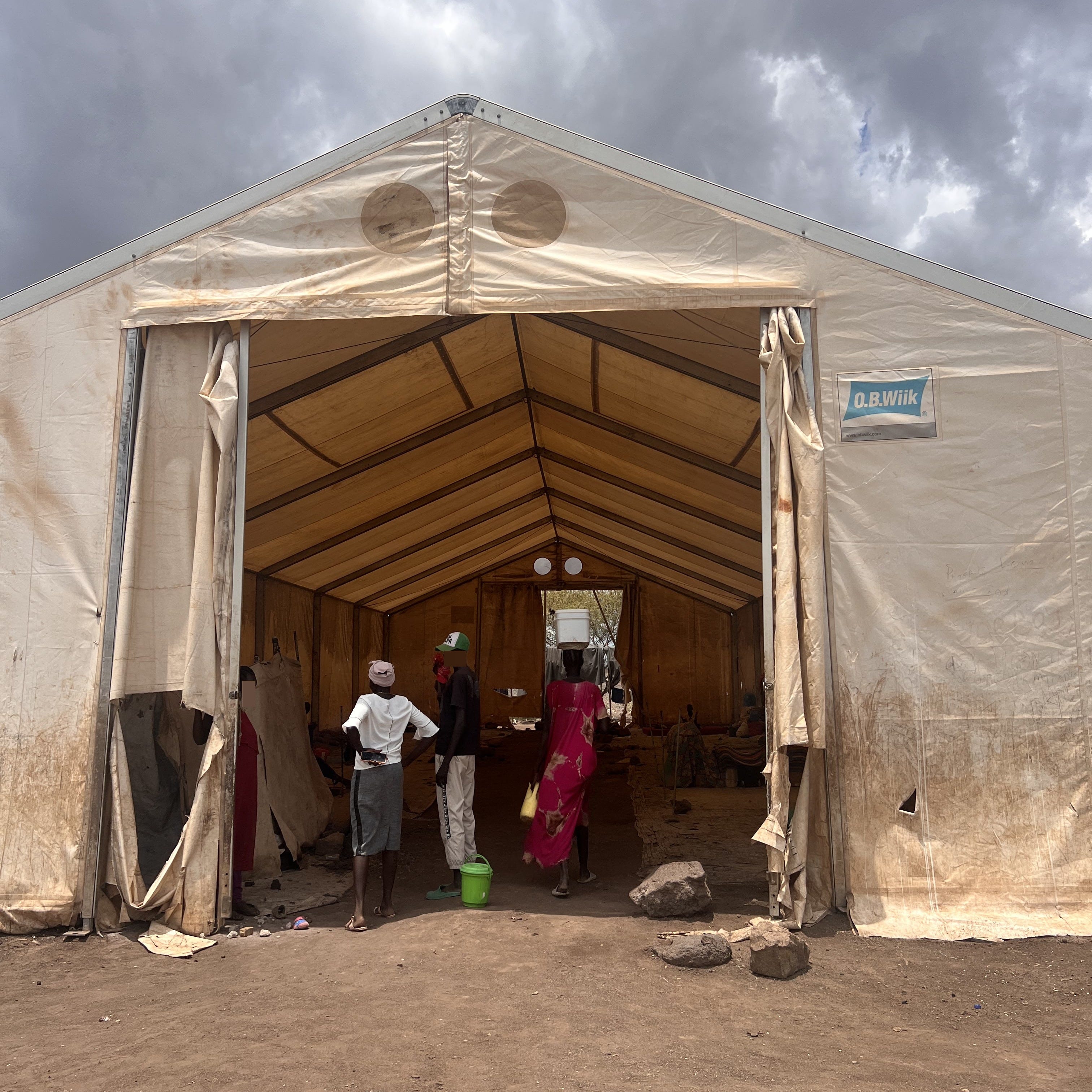
Despite the insistence on impermanence, Kakuma functions as a place where life is actively made and sustained by residents. Refugee camps are often thought of as spaces of interruption, where people wait for resettlement or return, but where their lives are placed on hold. I think this framing misses some important parts of what is happening on the ground. Kakuma is not a pause in people’s lives. It is a place of long-term social environment in which people are building formal and informal economic and cultural systems under conditions that defy popular imagination.
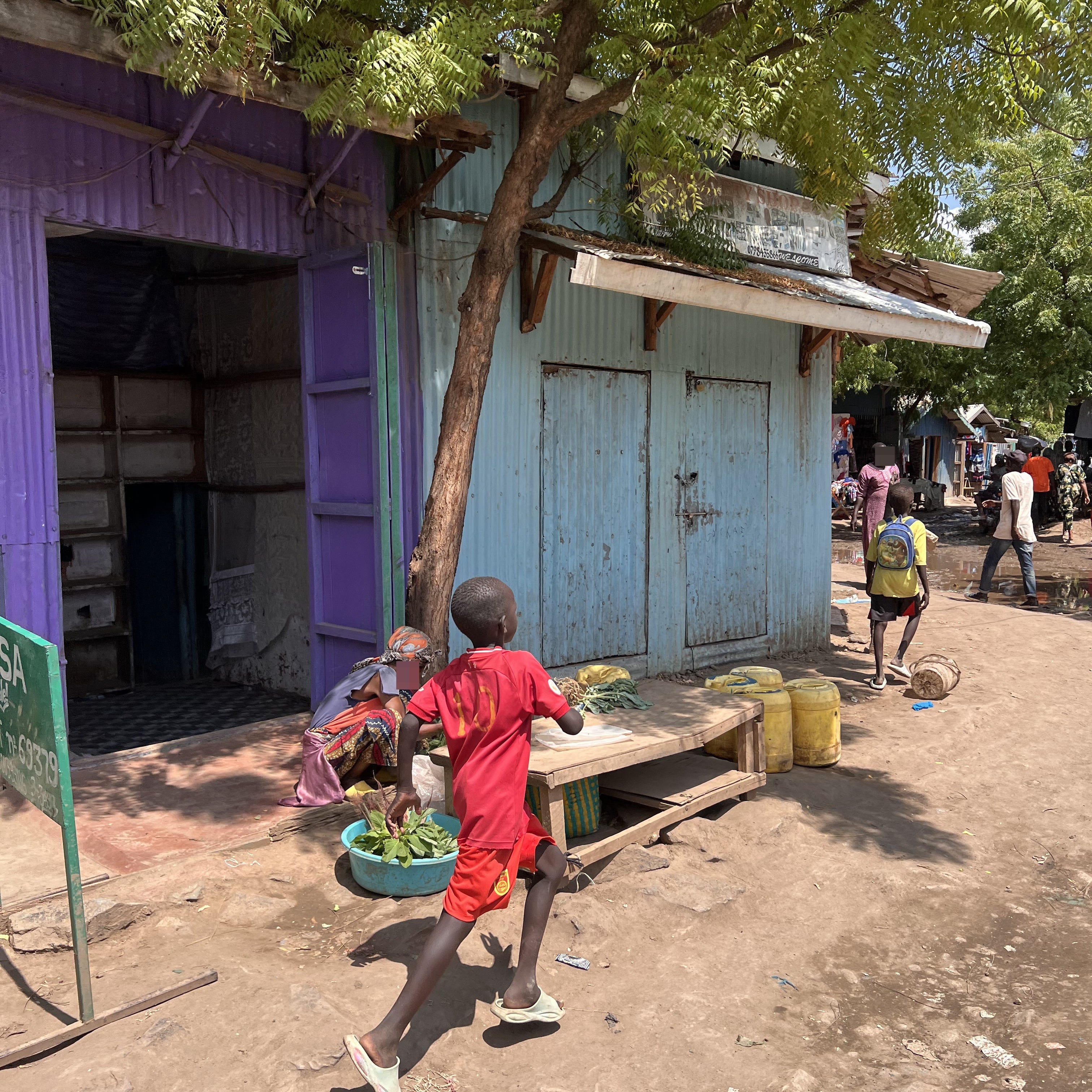
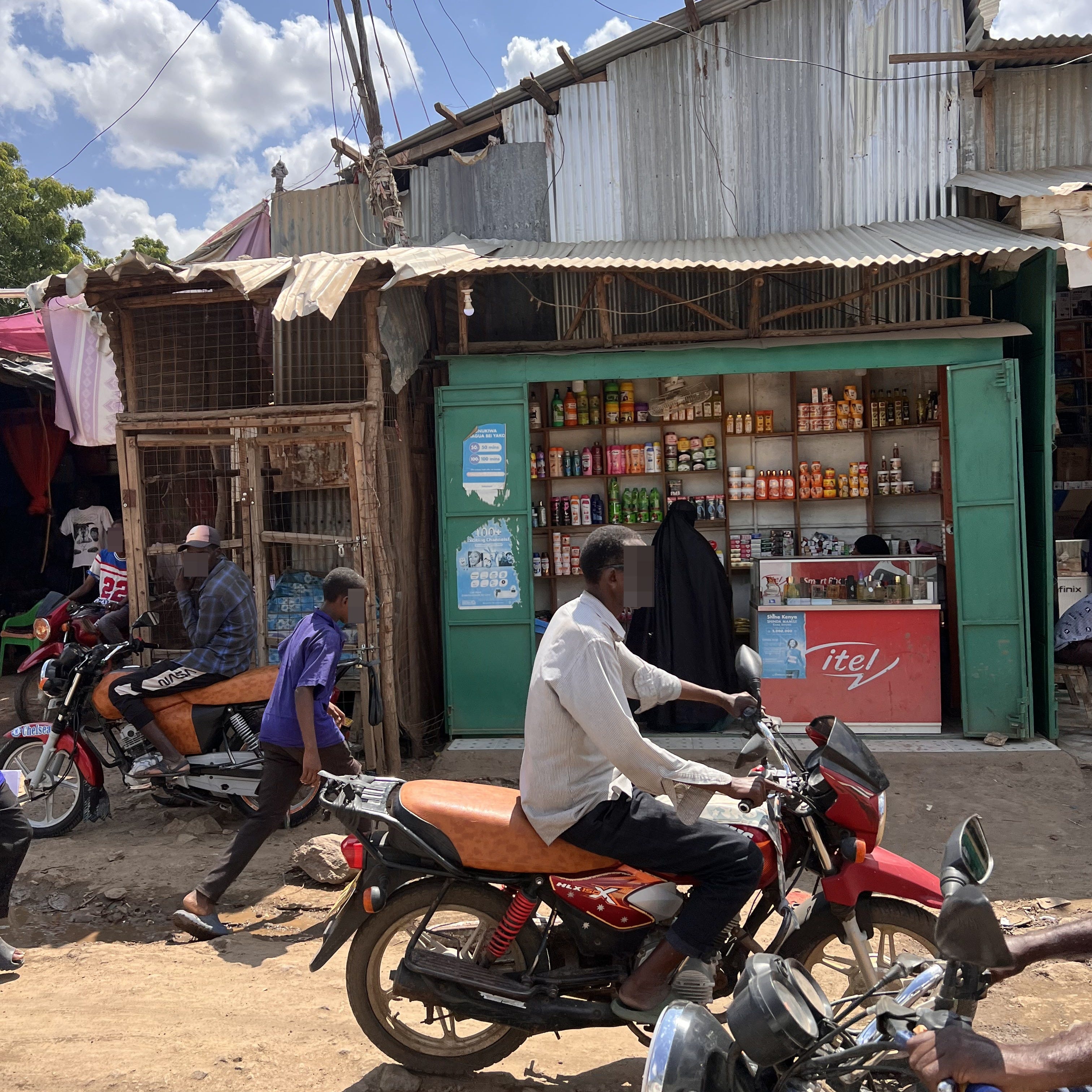
Creation in Kakuma is not confined to formal artistic or creative production (though those things are happening). Most of it appears through ordinary forms of labor. For example, markets operated and run by refugees are functioning alongside camp ration systems and help close gaps left by humanitarian provision while also providing entrepreneurial opportunities. As a way to keep traditions alive, practices like religious rituals and storytelling in native languages sustain memory across the generations and keep traditions alive despite separation from home/native land.
Things like innovative media initiatives circulate information within the camp, prioritizing internal communication over visibility to external audiences. I had the opportunity to visit with FilmAid’s radio program in the camp, where informative safety and health information was shared in several languages over the air, providing access to information instantly to hundreds. For long-term residents and for new arrivals making their way to the camp, these programs are not symbolic but are sustained indigenous ways of knowing and living that assert continuity in a setting where the future can feel legally unresolved.
In humanitarian governance, culture is often treated as secondary or something to be supported only after basic and fundamental needs are met. However, as I witnessed in Kakuma, for many living within contexts of prolonged displacement, culture is not supplementary. It is essential. It shapes how people understand responsibility, time, and belonging, as well as developing relational understandings with other populations they do not share a language with but are now sharing space and life with. And this is especially important when legal recognition and long-term security are uncertain. Kakuma persists not because people are waiting, but because people have adapted and are living and making decisions within these conditions.
This presents a paradox of sorts. It seems that refugees are encouraged to demonstrate resilience and self-reliance, even as legal provisions continue to restrict their attempts at livelihood. Heritage and traditional cultural expressions are welcomed so long as it does not require recognition and it’s celebrated as evidence of endurance, but rarely acknowledged as a claim to rights or even stability.
It feels as though this system sustains life while limiting possibilities. And true decision-making power remains geographically and politically distant from those most affected by its outcomes. In Kakuma, refugees are living within administrative structures they cannot effectively shape or change. Services are designed to maintain survival rather than to support any real autonomy or long-term security. Even before recent funding reductions, there was little buffer and no real protection against disruption.
What is Resilience?
It is hard to pinpoint the effects of austerity in Kakuma because they do not happen all at once. Instead, they build up over time. Each change might seem manageable on its own, but together, they slowly change daily life for refugees.
At the same time, the language used to describe displacement is changing in Kenya. Which is to be expected, as some of these communities have been present in the national discourse for decades now. Refugees are now increasingly encouraged to be entrepreneurial and self-reliant, which is a global trend that I’m a bit hesitant about. These qualities are often framed as empowerment, even as legal and administrative barriers to movement and political participation remain firmly in place. The responsibility to adapt is placed on very vulnerable individuals whose ability to shape their circumstances is constrained. It’s here that survival becomes almost a personal task, while the structures (and institutions) governing life in the camp remain largely unaccountable.
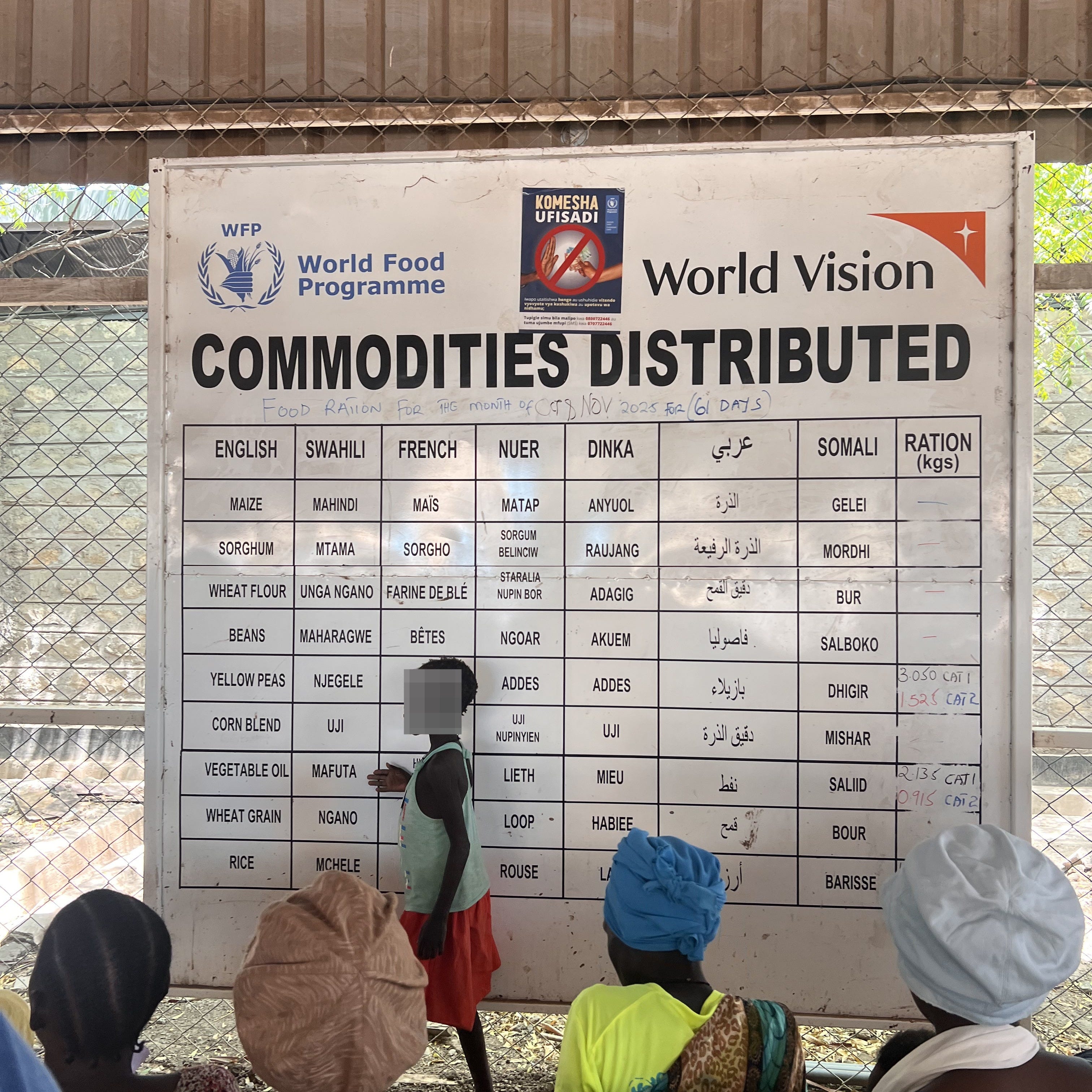
This new focus aligns with changes in Kenya’s refugee policies, particularly with the development of the Shirika Plan. On paper, these ideas seem to move away from keeping people in camps long-term and towards societal and political integration. In reality, they are given more responsibility, but not necessarily more rights.
In Turkana County, these problems are influenced by the long history of host communities being left out of the donor aid conversation, despite the tolls that political abandoning and climate disasters have taken on the population. Kakuma is in a region that has faced years of underinvestment, environmental challenges, and poor access to services. Many people in the host community also struggle with shortages of water, health care, education, and jobs. As aid shrinks, both refugees and hosts must deal with systems departing.
As funding drops, competition for services and jobs grows, and not because the communities are naturally in conflict, but because neither group truly controls the systems that affect them. In this way, integration can end up being a way to manage the pullback of support and not a real pathway to inclusion. Responsibility is shared on paper but when real support fades, it leaves both refugees and host communities to deal with the effects of austerity on their own.
Witnessing without Extraction
What I remember most from Kakuma is this reminder (mostly to myself) that human beings are incredibly adaptable. Refugees and asylum seekers have found ways to navigate systems designed to manage (not resolve) displacement. And governance showed up not just as restrictions, but also as delays, uncertainty, and the routine of waiting.
I processed so many complex emotions in the field, and truthfully, I’m still trying to grasp at some answer for pathways forward. And this post isn’t to capture the entire reality of what is happening on the ground in Kakuma. I don’t think I could ever capture everything. Plus, the reality is shifting and reshaping daily. Instead, I want to reflect on a policy moment that often goes unnoticed because it is not dramatic. Camps rarely collapse suddenly. More often, they persist through slow decline and attempts at endurance. And to be an honest witness really takes introspection and reflexivity. I think it sometimes means avoiding stories that reduce complex lives to moments of crisis and rejecting any attention that takes meaning without responsibility. This is not a spectacle.
During my reflections, I’ve come back to something that I’ve been thinking about throughout my research. It’s this idea that refugee camps are more than just administrative sites or places for humanitarian aid. They are (and can become) spaces where law, geography, and daily life come together in ways that go beyond displacement. And at the same time, life continuing in these camps does not mean the systems set in place are working. It just shows that people, refugees, keep creating meaning and stability, even when they are not allowed to settle permanently.
As I keep pulling things apart, I want to capture more on visual evidence and how we document space. I want to explore how images, maps, and participatory media can show what law and policy often make hard to see. And to ask what can happen when we see camps as places shaped by history, culture, and long-term effort. And to consider the realities of displacement in places and regions where the emergency never really ends, and where governance often works by stepping back just as much as by taking charge.
My time in Kakuma has both shifted and cemented how I see this work and honestly, how I see places of displacement. It helped me understand and work through some of my own personal narrative, as I had and still have family members living in different refugee camps in the region.
It’s become clearer to me that if camps are no longer temporary in reality, then our approaches to movement, asylum, and protection need to reflect that. I don’t think this means giving up on current changes or lasting solutions, but it does mean moving past systems based on endless waiting. The real question is whether our legal and political thinking can shift to recognize permanence where it already exists and respond clearly, instead of putting things off.
—
I’m hoping to share more in the coming days as some of my thoughts become sharper. Thank you for joining me on this journey!